
Thinking Less, Feeling More: The Quiet Language of Self-Care
A gentle exploration of overthinking, mindfulness, and self-care, where the mind softens, the body leads, and presence becomes a form of healing.
Mia
12/22/20253 min read

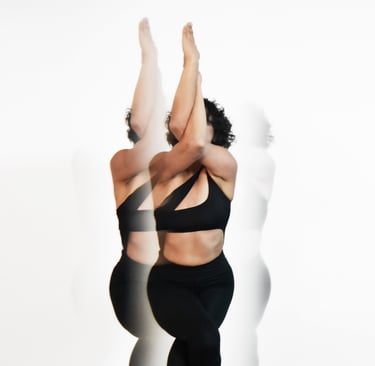
The mind and the heart are always in conversation. Sometimes they move together with ease, and sometimes they pull in different directions. What is often called overthinking is not a flaw or a failure. In many cases, it is a sign of care—a mind that learned to stay alert because love, connection, and emotional safety truly matter. When life feels uncertain, the mind naturally tries to create stability by thinking ahead.
The relationship between mind and love
Love carries vulnerability, timing, and the unknown. These are things the mind cannot fully control, and so it tries to help by analyzing, replaying conversations, and searching for clarity before it arrives. This response is not irrational; it is protective. The mind believes that if it can predict outcomes, it can prevent pain. Over time, this can create tension, especially when love asks for presence rather than certainty.
What overthinking actually means in everyday life
In daily life, overthinking often appears as a desire for answers before they are available. The mind rehearses future scenarios, checks alignment repeatedly, and looks for reassurance internally. This pattern is common in people who are emotionally aware and deeply invested in meaningful relationships and personal growth. Overthinking is rarely a lack of discipline or focus. It is often responsibility turned inward.
The body’s role in calming the mind
The body responds differently to uncertainty. During times of physical sensitivity, emotional openness, or hormonal change, the need to slow down becomes more pronounced. Rest, warmth, and simplicity are not signs of withdrawal but biological signals. Many somatic and traditional practices recognize these phases as necessary for balance. When the body is listened to, the nervous system begins to settle, and the mind follows.
Why mindfulness quiets mental noise
Mindfulness and meditation create space between sensation and reaction. When stress decreases, the brain stops scanning for danger, and awareness becomes more present. The mind no longer needs to grasp for meaning or certainty. Calm appears not because everything is resolved, but because the nervous system feels safe enough to rest. This is regulation, not avoidance.
Love without control
Overthinking often attaches itself to love because love feels precious and uncertain. The mind tries to secure outcomes in order to relax. Yet love does not respond to pressure. It responds to presence, honesty, and space. When control softens, connection is no longer something to manage. It becomes something that can unfold naturally, without being forced into guarantees.
Gentle structure instead of self-pressure
Periods of overthinking are often misunderstood as a lack of motivation or purpose. More often, what is missing is gentle structure. Simple routines offer grounding without overwhelming the body. A walk, a short yoga practice, a moment of stillness, or one small task completed with care can provide enough support for the mind to relax. Structure becomes a form of self care rather than discipline.
The deeper truth about an overthinking mind
An overthinking mind is not broken. It usually appears because there is depth, sensitivity, and a strong capacity for connection. It often becomes louder during life transitions, when old certainties dissolve and trust is shifting from prediction to experience. From a yogic perspective, the mind functions best when guided by the body and the breath, rather than leading alone.
A softer way forward
Quiet phases, rest days, and moments of not knowing are not signs of being lost. They are often moments of recalibration. Yoga, mindfulness, meditation, and self care are not escapes from life but ways of meeting it with less tension. When the body is honored and the mind is no longer forced to be in control, a steady calm emerges—one that allows love, clarity, and direction to take shape in their own time.
Designed Yoga: A Space to Feel and Create
At Designed Yoga, spaces are created to gently reconnect mind and body through movement, art, and conscious creation. Yoga becomes more than a physical practice; it becomes a way to listen inward, to move with curiosity, and to meet the inner child with softness rather than judgment. Through mindful movement, creative expression, and moments of stillness, these spaces invite a return to presence—where thinking eases and feeling is welcomed. If this reflection resonates, there is an open invitation to explore further, to connect, and to step into practices that honor both sensitivity and strength, in a way that feels natural and unforced.